I feel like no trip to Japan would be complete without a visit to Kyoto. That being said, we were going to have to hustle and do some planning to maximize our opportunities to see the area, while on a cruise that docks elsewhere. Our closest p…
I feel like no trip to Japan would be complete without a visit to Kyoto. That being said, we were going to have to hustle and do some planning to maximize our opportunities to see the area, while on a cruise that docks elsewhere. Our closest port would be Kobe, and the good news was we would be in Kobe overnight. Also good news, Japan has an amazing bullet train system. We just had to figure it out (see the end of this post for my tips).
After docking at 8 AM, we were two of the first four off the ship. The other couple, from Australia, were also headed for the train station, so we shared a cab and the adventure of finding the right train. Turned out to be pretty easy.
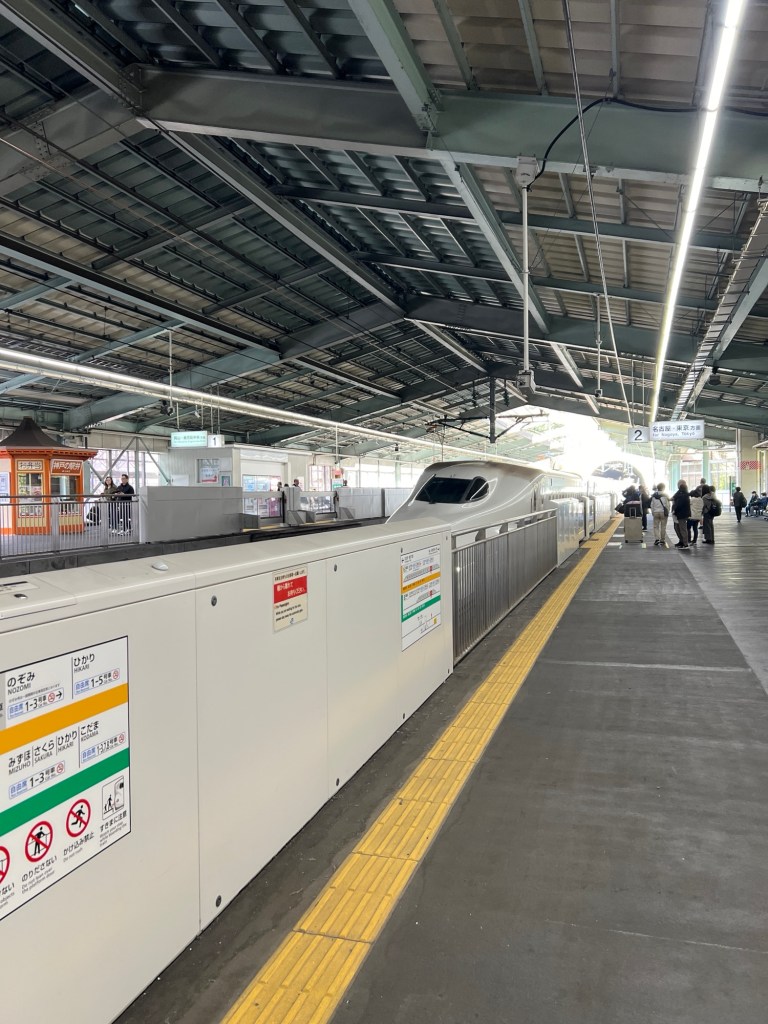
The bullet train between Kobe and Kyoto is the most efficient way to get there and takes around half an hour. The train does NOT get up to its full speed of 199 mph (320 km/h for my metric readers) on such a short route. But it does move so fast you can get a bit disoriented looking out the window.
Once in Kyoto, we met our guide Tomoko Ayukawa just outside the station. Tomo was amazing, and it was such good karma we were matched up for today. Weeks before our trip, she helped me make plans, gave me solid advice, and even helped us make reservations for dinner (more on that later). My goal of covering a lot of ground in such a short time would not have been possible without advance planning of an understanding, accommodating, and really nice guide to make it all possible. Thank you, Tomo!
The Japanese cities we have visited have all been larger than I expected, and none more so than Kyoto – with 1.8 million residents. Pictures only ever show the historic temples, castles, and shrines and it can be a shock to see each surrounded by modern skyscrapers. Kyoto does have ordinances to keep buildings lower so they won't overpower the historic buildings in this city that was the capital for more than 1,000 years. Today, we covered a lot of territory.
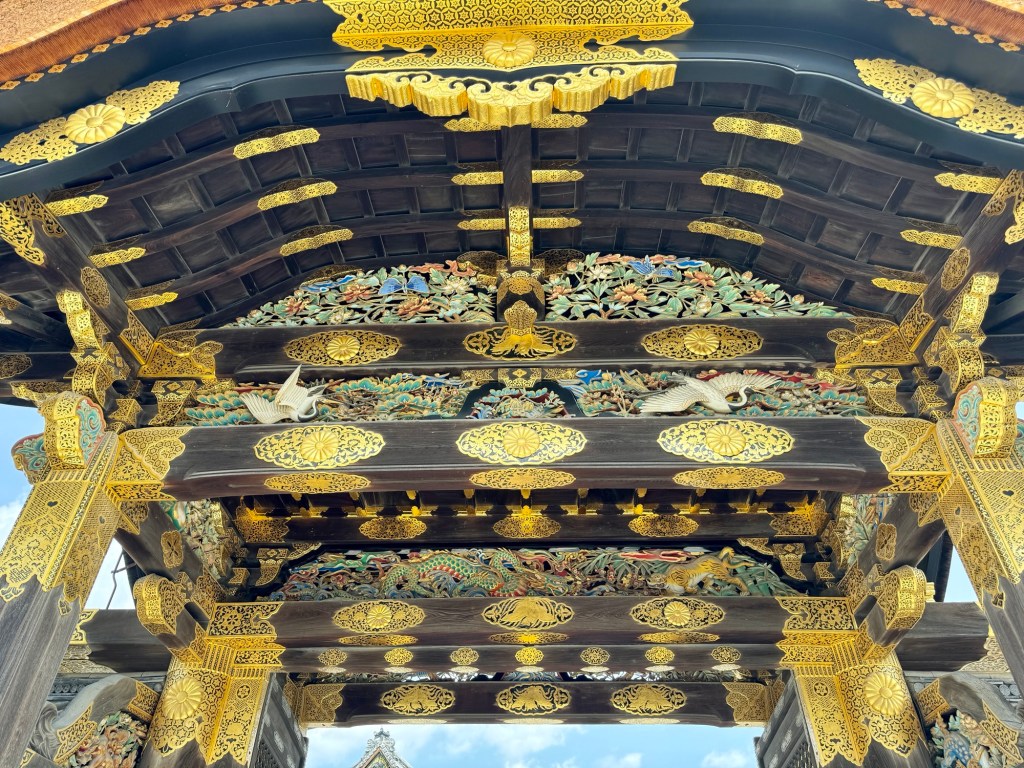
Starting off by taking the subway to the Nijo-Jo Castle, a World Heritage Site that has played a key role in Japanese history, and the Tokugawa family who started and ended the Shogun era during their multi-generational, 260-year period. The Castle was completed in 1603 and was far more elaborate than any we'd seen. Absolutely stunning craftsmanship with gold leaf finishes. Carvings of cranes, flowers, bamboo, and lions represented significant iconology.
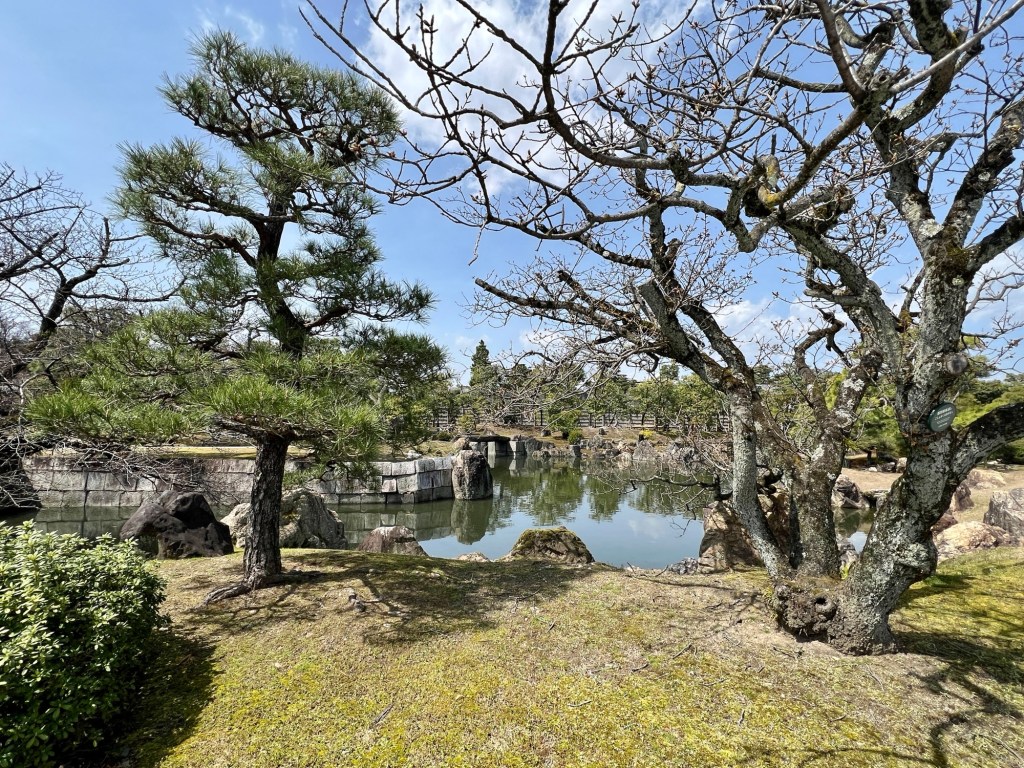
Some of the large rocks in the Palace Garden were wrapped in silk and presented as gifts to the Shogun.
Like all other interiors we've been to, it's shoes off. Unfortunately, no photography is allowed inside the palace's 33 rooms, which are arranged in a zig-zag pattern to better enjoy the garden views of the era. Each room is void of furniture, just the silk-bordered tatami mats used then, but the walls are covered with the most amazing murals, each with special meanings for the purpose of the room. Scenes range from intimidating tigers and leopards (which they thought were female tigers), massive pruned pine trees, birds of prey, and delicate flower blossoms. These are the kinds of images I always associated with Japanese art – so beautiful.
This is the only surviving example of a fortified palace complex and has become famous for having "Nightingale floors" which make a pleasant sound as you walk down the corridors, reportedly to warn of intruders. I loved that "fact", but it turns out to be just a story. The floors make noise because they are old.
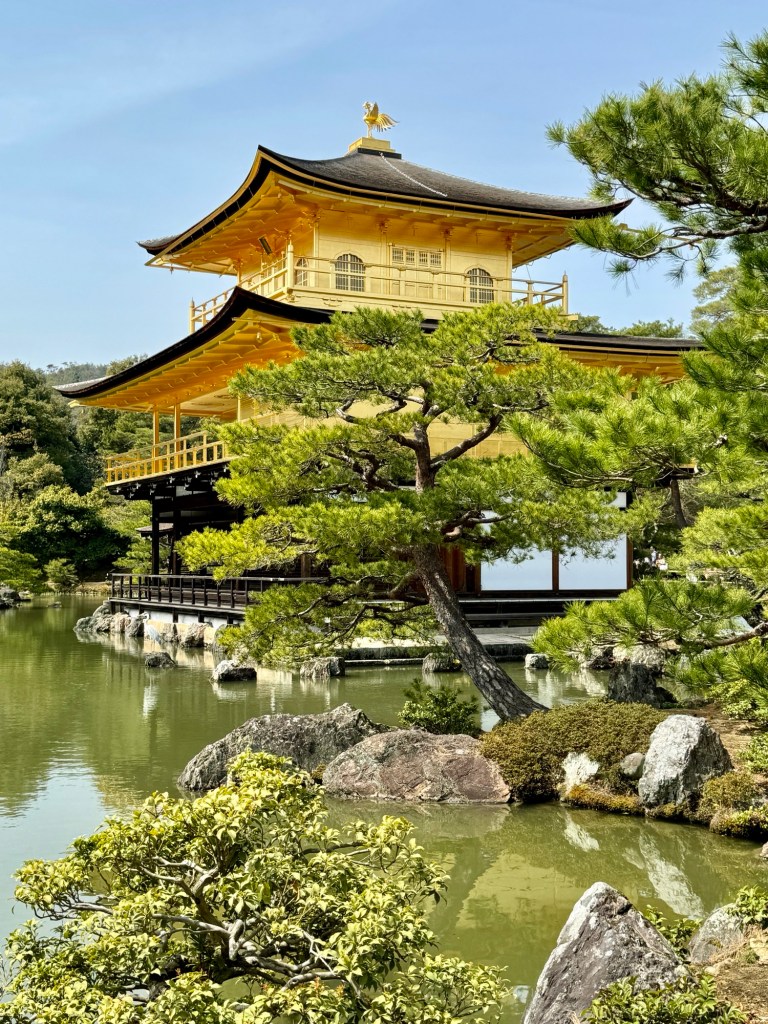
We then jumped into a cab and traveled to the NW corner of the city and Kinkaku-ji, known as the Golden Pavilion. In 1397 it was built as a palace that was at the center of politics and influence. When the Shogun passed away, he gave instructions for it to become a Temple. Now a Zen Buddhist Temple, the gold leaf on the top two floors has been restored and is cleaned daily.
This was one of the good ones!
Everywhere we went was incredibly crowded, it was a Saturday, finally a warm, sunny day, the beginning of the year-end school break for Japanese children, and the reported full bloom of the cherry blossoms. Although, sadly, the forecasts have been wrong and many trees are just in bud, others in various stages of bloom.
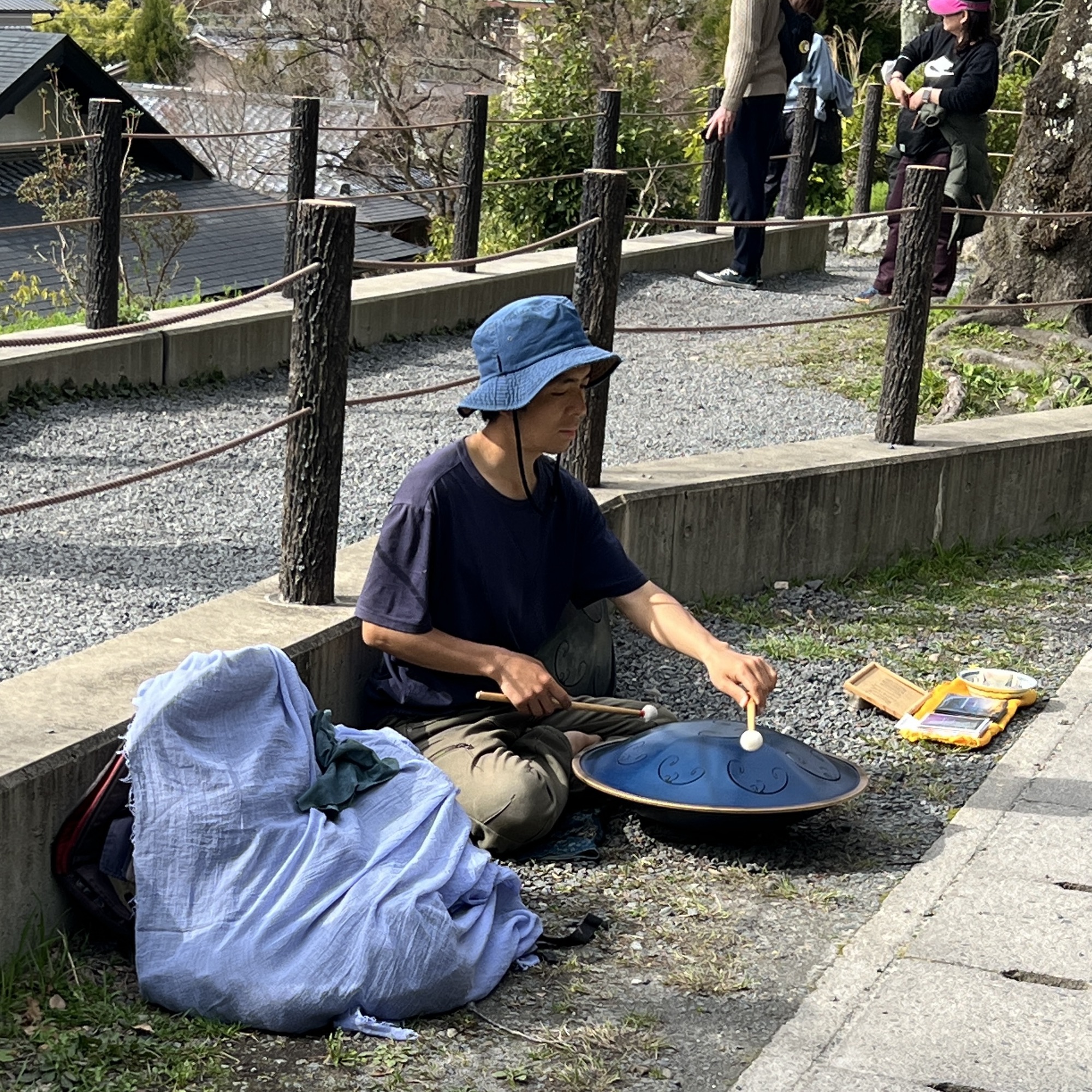
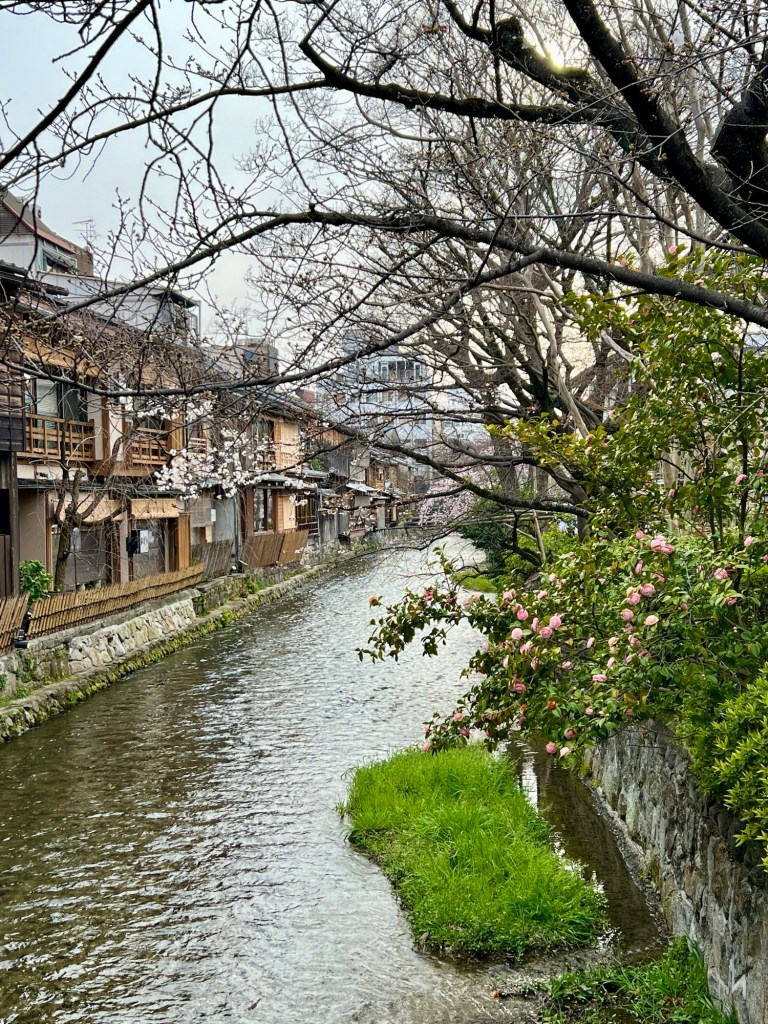
We abandoned the thought of using the bus and took another cab past the Imperial Palace to the far eastern part of town and the famous Philosopher's Walk, near Kyoto University. This delightful area was breezier and funkier. We had a quick bite to eat in one of the small cafes that dot the area, along with shops, street performers, cat fanciers, and more temples. Flowers were blooming, the water was clear, and you could see large carp swimming by, and we heard the sound of the small Japanese nightingale. We did not see any of the Japanese Monkeys that also inhabit the area. (Kyoto also has issues with wild boar and aggressive black bears). It was a nice contrast from our earlier activities.
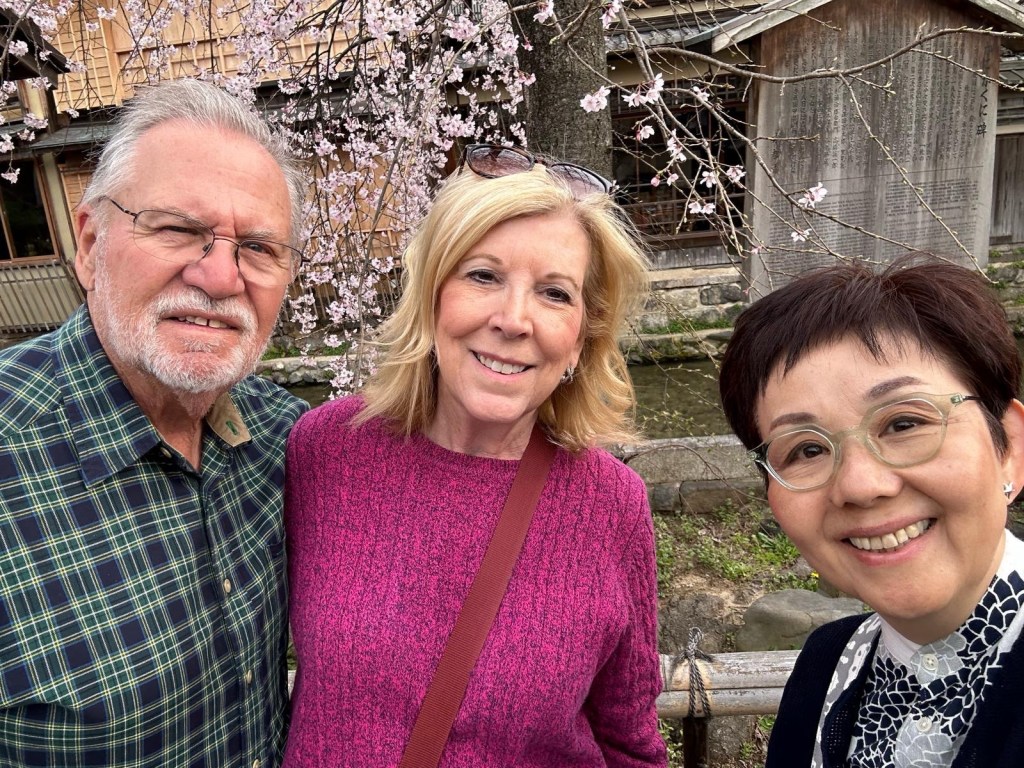
Posers by one of the oldest trees in the Park.
After a stop to see the impressive Nanzen-ji Buddhist Temple, where Zen monks train, we headed back on the subway towards the more centrally located Gion District. We saw the Yasaka Shrine from the outside and then wandered into Maruyama Park. The Park is a very popular local spot, and there were dozens of food vendors, pop-up restaurant seating, games, and more. The trees that were in bloom were crowded photo spots, with everyone vying for those perfect shots.
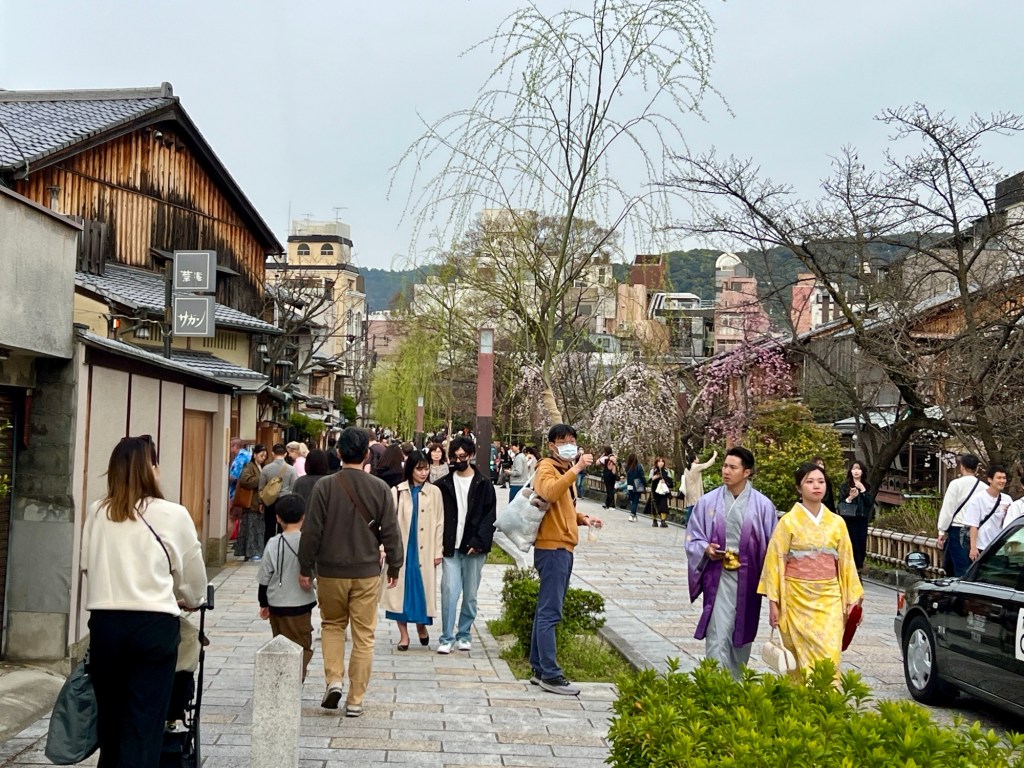
Those you see in traditional clothes are just dressed up for the night.
I didn't realize the Gion District was as large as it is, and we visited the quieter and more crowded areas. Historically, this was a Geisha (called Geikos here) District and is now still home to about 250. They follow much stricter rules than the group we net in Niigata. No smartphones and certainly no Netflix.
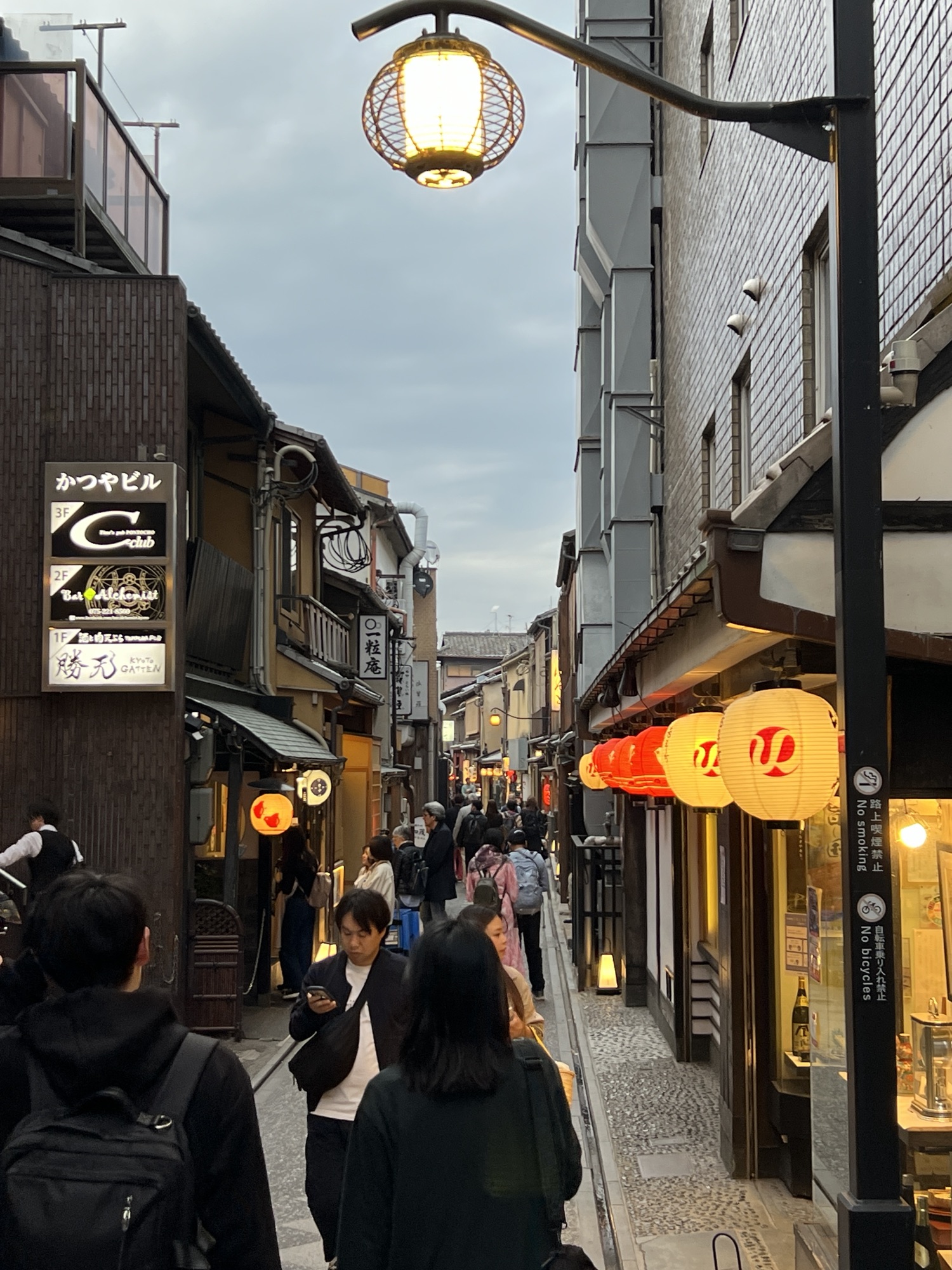
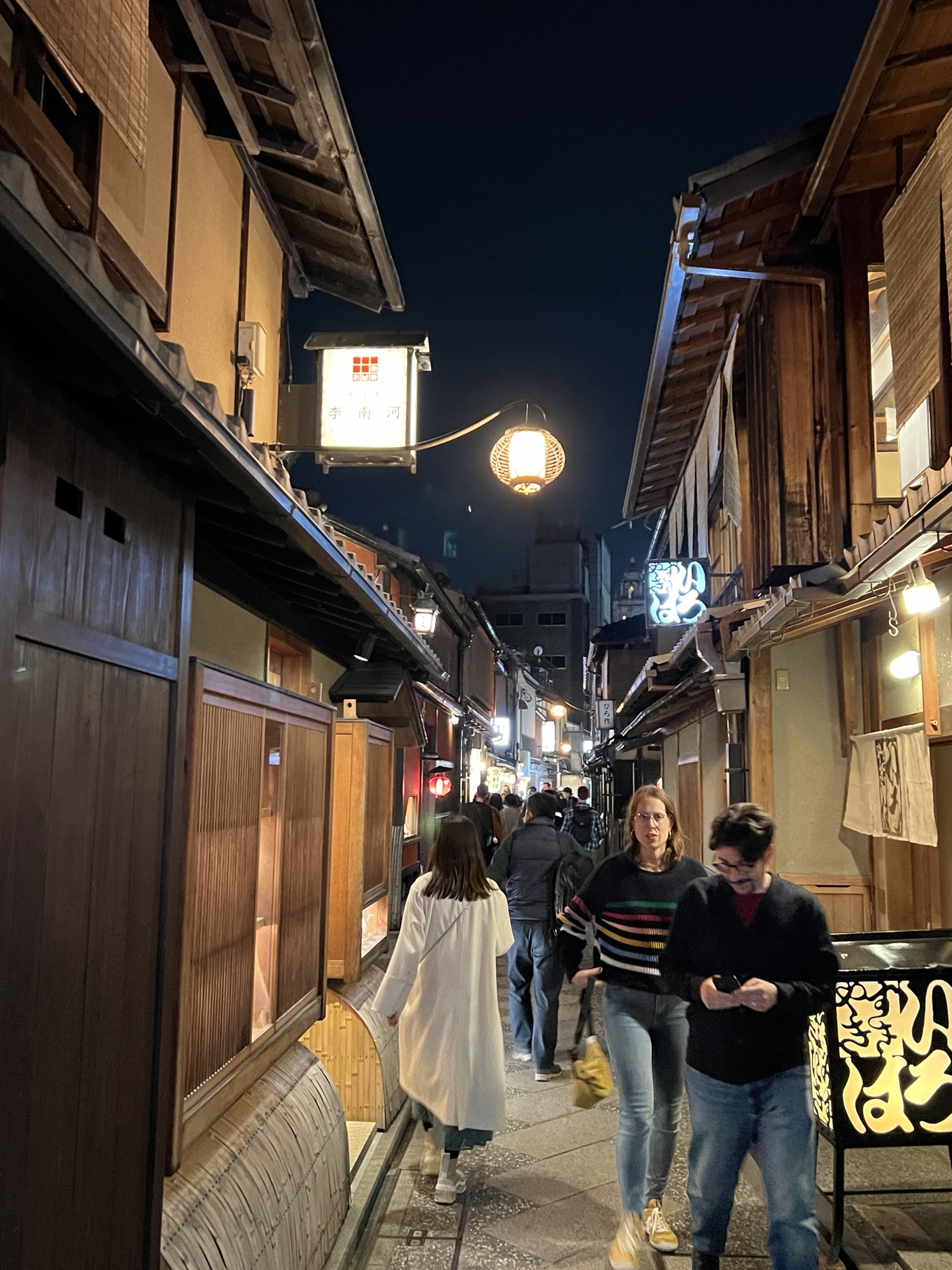
We walked over to the Pontocho River for our Wagyu Beef dinner at Shin. This is a really interesting area, with narrow alleys, and enticing scents wafting from all the restaurants. We had a really great, fun dinner, grilling the meat at our table, along with some kimchi and more garlic fried rice. These are small places, ours had just four tables, three could hold 4, and one larger table. Reservations are a good idea. If the restaurant has a menu posted outside you can go in, if not it's by invitation. If spots open up, they will put out a sign they have a table available.
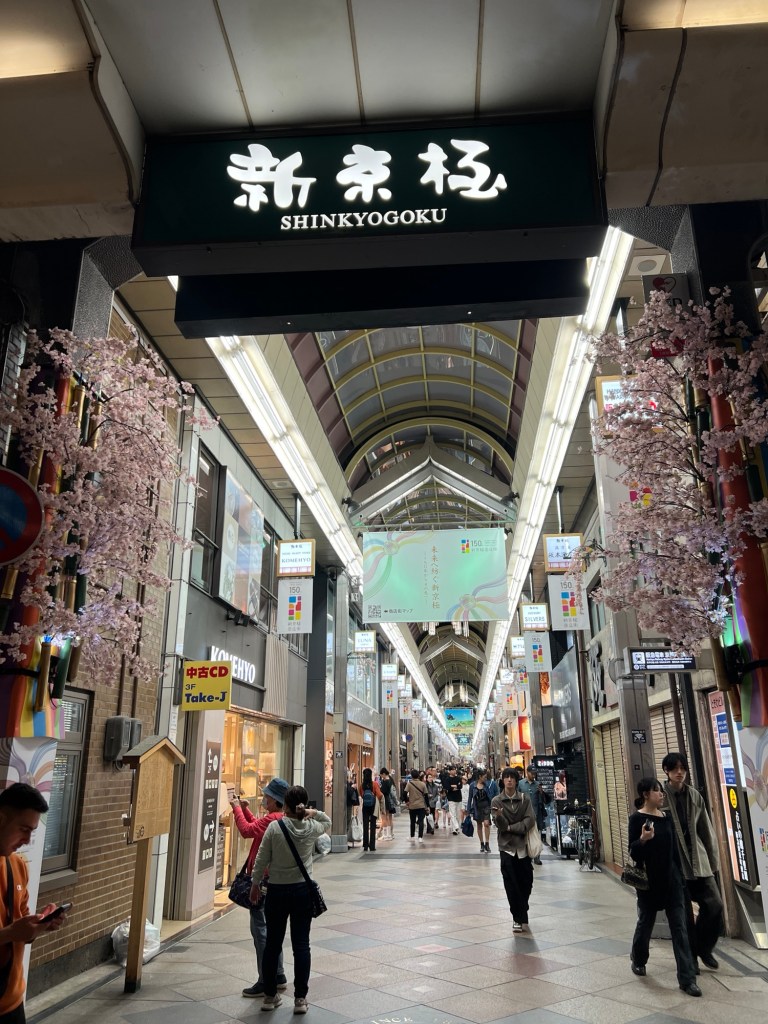
After dinner, we took a slow stroll on the busy Kawaramachi Steet (rounding out our walking for the day to about 10 miles). It was like being in Times Square but with 5th Avenue shopping opportunities. There were throngs of young people here. We made our way to the Shijo subway station for a quick ride back to the Kyoto rail station at the South end of town. Our train left at 9:07 for Shin-Kobe, and, then, a final cab ride back to the port and our ship, the Azamara Journey.
Whew – good night!
Tips for Taking the Bullet Train in Japan:
After reading a lot, I've thrown out those notes and offer the following thoughts:
Get your tickets ahead of time at a smaller station, as this saves time and avoids the potential of a sell-out during popular times. Good thing we did that because we heard the trains were booked.
Bullet trains often have their own station – called Shin (for Shinkansen). Stations will generally be called Shin-(name of city). So, for example, Kobe has 2 stations, one for the JR local routes, and one for Shin-Kobe bullet trains. In Kyoto, all trains are in one station – so is just called Kyoto.
If you buy tickets online in advance be prepared to pay quite a premium. Reserved seat tickets for two cost us about $115, others paid about $200.
Having a reserved seat cost a bit more, but made the experience a bit more relaxing
Larger stations (like Kobe and Kyoto) have good signage in English. English language ability can be very limited among staff, so be prepared to use Google Translate or write down your destination, in Japanese, in advance.
Make sure you have your return location written in Japanese if you plan to take a cab back to an off-beat location, like a port. It's easy to Google the site, translate online, and take a screenshot so you are ready.
Trains are identified with a name, number, and destination. We saw no distinction between colors. I read that green cars are reserved, forget that, it was strictly by numbers. Most cars did seem to be reserved.
Cars are comfortable and all no smoking.
People are polite, the woman in front of me actually asked me if she could recline her daughter's seat (no problem – there's plenty of room).
Try not to fall asleep and miss your stop, getting off and on is a very quick process! You must be ready to exit before the train comes to a stop.













No comments:
Post a Comment